Digital Mosaics: The Work of Davide Maria Coltro
Davide Maria Coltro (Verona, 1967), artist and researcher, lives and works between Milan and Lake Maggiore. For decades, he has explored the expressive potential of the screen with an analytical and pioneering spirit. His projects challenge the traditional processes of creating, circulating, and experiencing art. The outcome of research begun in the late 1990s is an unprecedented relational platform that the artist uses to produce and share what he calls his “electronic painting.”
Engaging deeply with art history and classical genres of painting, Coltro defines his works as “painting beyond matter”: pieces that inhabit a technological canvas – the Quadro Mediale – returning the image to an experience of time and space. This is, in his words, a kind of “bilocation,” where the artist acts upon the work without being physically present.
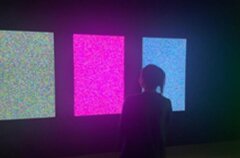
Ravenna recently provided the stage for a remarkable celebration: the centenary of the Mosaic School at the Academy of Fine Arts. Among the featured works was I’m a Mosaic! by Davide Maria Coltro, a piece that transforms mere observation into an immersive and contemplative experience. This abstract, generative triptych of media paintings constantly evolves, offering a contemporary and dynamic interpretation of the mosaic tradition. It also represents a technological and conceptual evolution of the very idea of mosaic art.
Coltro’s work becomes a journey through the fundamental dimensions of the mosaic reimagined in digital form: light, movement, and color. Pixels, conceived as modern tesserae, emerge and dissolve in continuous flux, creating a “ceaseless, springing painting.” The result is a mosaic not only to be viewed, but to be entered—a contemplative and spiritual space in which the play of surfaces gives rise to harmony that resonates beyond sight, touching the quiet depths of the inner self.
His work has been exhibited in major institutions in Italy and abroad, including MART in Rovereto, the Galleria di Trento, GAM – Galleria d’Arte Moderna Achille Forti in Verona, SPSI Art Museum in Shanghai, ZKM in Karlsruhe, the Italian Cultural Institute in San Francisco, GASC Villa Clerici in Milan, the Paolo VI Collection in Brescia, the Museum of the Gilded Bronzes in Pergola, Fondazione Lercaro in Bologna, MAGA Museum in Gallarate, Fondazione Calderara in Ameno, and MAR in Ravenna. In 2011, he participated in the Italian Pavilion at the 54th Venice Biennale. In 2022, the VAF-Stiftung Foundation dedicated a monograph to his work, curated by Elena Pontiggia and published by Manfredi-Maretti Edizioni.
This December, Coltro will return to Ravenna to deliver a lectio magistralis as part of the Erasmus+ DigentArt project.
02
01
Accessori
Sneackers
Siamo un punto di riferimento per la street culture proponendo accessori unici e di tendenza.
Proponiamo sneakers ricercate e limited edition dei migliori brand nazionali e internazionali.
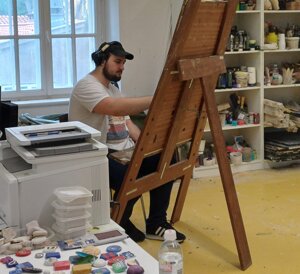
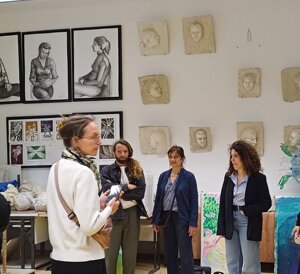
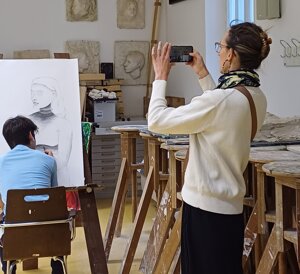
Dubrovnik - 21/22 may 2025 - Department of Art and Restoration UNIDU
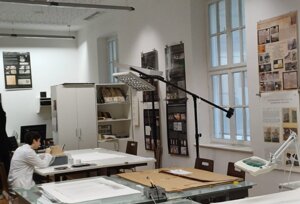
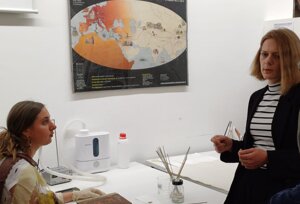
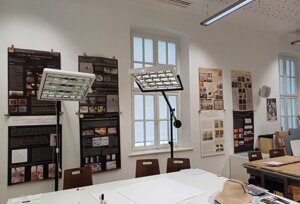
The Department of Art and Restoration at the University of Dubrovnik had the honor of hosting partners from Italy and France on May 21st and 22nd, 2025, as part of the Erasmus+ project DIG.ENT./ART.
We welcomed representatives from INSEAMM Beaux-Arts de Marseille (France), as well as our Italian partners from ABA – L’Accademia di Belle Arti di Ravenna and Demetra Formazione.
During the project meeting in Dubrovnik, our guests participated in four university-led restoration workshops – wood, paper, metal, and textile – conducted under the expert guidance of our faculty. They also visited the university art studio and the Ecology in Art and Design workshop, where Assoc. Prof. Dr. Art. Iris Lobaš Kukavičić and Assist. Prof. Dr. Margarita Bego presented student projects and academic programs.
In addition to the workshops, the group also visited UNIDU radio and UNIDU TV, where the studio editor and producer introduced the work and activities of the student media centers to our partners.
We thank our partners for their visit and the productive meeting, during which future activities for the continued successful implementation of the DIG.ENT./ART project were agreed upon.
We look forward to our ongoing collaboration!
Ravenna - May 19, 2025 - DIGENT ART: MANY INSPIRATIONS AND IDEAS FOR DIGITAL IN ART
The DIGENTART project continues and is heading into its final year. After the phase of analysis and exploration of innovative cases and experiences, last year the Institutes and Universities involved, DEMETRA FORMAZIONE, INSEAMM Marseille and University of Dubrovnik, carried out training experiences, workshops and educational programs.
It was an excellent opportunity for students, teachers, artists, professionals and practitioners to get in touch with innovative experiences in digital art, animation and advanced techniques of using advanced ICT tools. But also a chance to reflect around the issues of the relationship between technology and creativity, technologies and digital languages, technologies and intercultural communication and cultural differences, sustainability.
During the past year, reflection was also initiated on the relationship between artificial intelligence, ethics, copyright and the role of artists in the creation of digital products.
Relevant themes on the role of art in the age of massive possibility of reproduction, not only technical but also conceptual, were taken up.
Anthony Pillete, a professor at INSEAMM, coordinated this report and reflection, including developing research and insights with students and faculty from the art institutes collaborating on the project.
One of its papers is posted on the DIGENT ART web space and can be commented on and enriched with contributions and interventions.
The TOOL BOX digital laboratory continues, which, after last year's multimedia productions, has been updated with workshop products and work-in-progress products from the students of the Art Courses of this academic year.
The relevant and multiple insights gained now enable the project to tackle the final phase, which will be organized around two key themes:
- The instructional design of content to be integrated into the teaching of digital technologies in art courses;
- The development of policies and recommendations to improve the effectiveness of training proposals and to build strong relationships with the territory, community, and institutions.
To fine-tune this final part of the project, representatives of Demetra Formazione, Academy of Fine Arts Ravenna, INSEAMM Marseille, University of Dubrovnik, will meet at an international meeting in Croatia, in Dubrovnik May 21-23. The themes and proposals for the project's final international conference, to be held in Ravenna next December, will also be outlined at that meeting.
For information and updates: www.digentart.eu
Study : The Integration of Generative AI in Art Schools | Environmental, Social, and Ethical Considerations
Anthony Pillette | Inseamm - Beaux Arts de Marseille
Study examines the integration of generative artificial intelligence (AI) within art and design education, assessing its implications through the lens of student engagement and perception. While generative AI introduces new creative possibilities and reveal a complex interplay of enthusiasm and apprehension among students, particularly in relation to environmental, social, and ethical concerns.
The research advocates for the adoption of open-source, locally hosted AI infrastructures as a viable strategy to promote responsible, transparent, and context-sensitive technological use within educational environments.
Workshop "Murmures electromagnetiques" - March 2025 - Marseille Inseamm
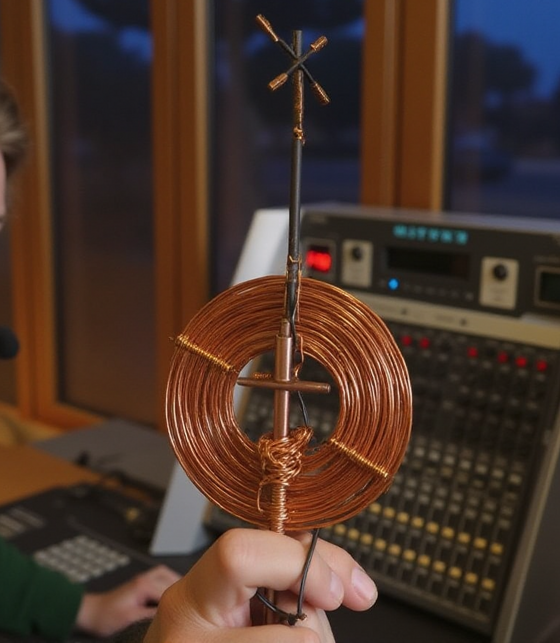
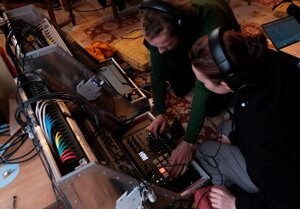
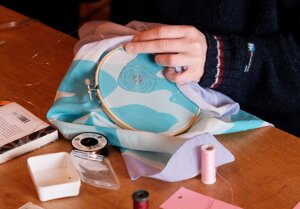
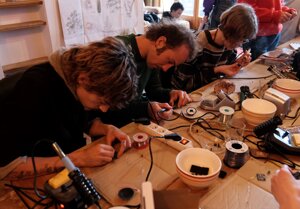
This workshop for 18 students and alumnis, invites participants to reflect on digital technologies and their impact. Held at the École des vivants in the French Alps, founded by Alain Damasio, it combines discussions, artistic practices, and hands-on activities to explore the essence of technological progress, and the hidden layers of the Internet.
Through building antennas and sonifying electromagnetic data, we’ll make the invisible audible—revealing the digital world's hidden signals. A space to rethink our relationship with technology and imagine more sustainable, mindful practices aligned with the natural world.
Learning goals:
-
Raise awareness about the societal and ecological impacts of digital tech.
-
Reveal and interpret invisible electromagnetic signals
-
Promote low-tech, ethical, and sustainable practices
-
Develop creative skills through electronics, drawing, and video workshops
- Critical thinking about the relationship between nature and technology
With the intervention of Benjamin Cadon and Claire Williams
________________________________________________________________________________________________________________________
WORKSHOP "NATURALE ARTIFICIALE DIGITALE - ACCADEMIA DI BELLE ARTI DI RAVENNA
29.01.2025
CREATIVE INTELLIGENCE - Meeting and workshop with Simona Bursi - A dialogue between illustration, animation and their evolution over time.
Animation and Intellectual Workshop - Introduction: Marino Cavallo and Beatrice Pucci (ABARAvenna teachers)
30/31 January 2025
DIGITAL ANIMATION - Workshop with Michele Bernardi (Director/animator) - The poetics of movement between natural and artificial. Introduction: Marino Cavallo and Beatrice Pucci (ABARAvenna professors)
19.02.2025
Evolution of Languages. Between human cognition and digital data. Meeting with Matteo Di Cristoforo, linguist/researcher. Starting from linguistic theories on creativity, we will explore the (im)possible forms that digital introduces in the processes of creating new meanings.
21.02.2025
A.I. IN ART A confrontation and an open debate. The teachers of the workshops Simona Bursi and Michele Bernardi will be present Final Lecture and presentation of the work of the workshops. Coordinators: Marino Cavallo and Beatrice Pucci (ABARA professors) Speakers: Antony Pillete (INSEAMM Marseille) Iris Lobas Kukavicic (University of Dubrovnik)
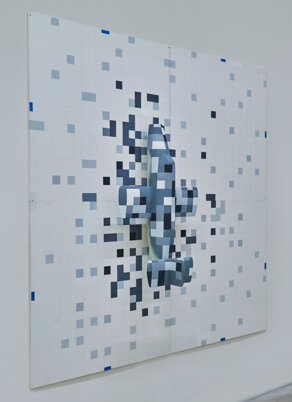
ARTE FIERA IN BOLOGNA
An important event to take stock of art in Italy
In the pavilions of the Bologna fair, the Italian scene unfolds: artists of the present and the past, established and young galleries, publishers, critics and institutions. An articulated panorama of which Arte Fiera is the most faithful interpreter, from its most consolidated dimension to emerging creativity.
The Main Section of Arte Fiera, divided as always between historic and contemporary art, is flanked by four curated and by-invitation-only sections: Photography and Moving Images, Multiples, Pittura XXI and the 2025 novelty, Prospettiva, dedicated to intercepting emerging artists, whether represented by young or established galleries. Photography and Moving Images is entrusted for the third year to Giangavino Pazzola, curator of Camera - Centro italiano per la fotografia (Turin). Multiples sees art critic and historian Alberto Salvadori involved for the second year. Davide Ferri, critic and independent curator with a strong specialisation in painting of the latest generations, curates Pittura XXI since its debut. Finally, the debut of Prospettiva is entrusted to Michele D'Aurizio, curator and art historian active between Italy and the United States. Alongside the curated sections, Percorso returns: not an actual section but an itinerary linking a number of stands in the Main Section and the curated sections according to a thematic criterion. After two years dedicated to artistic languages (Ceramics, 2023; Drawing, 2024) the theme of Percorso 2025 touches on the content of the works. The new theme of the format is in fact the idea of ‘Community’, and its meaning is encapsulated in the phrase ‘Community: not “I” but “we”’.
ART CITY
Art in the city
In Bologna On 6 February, on the occasion of Arte Fiera, the thirteenth edition of ART CITY Bologna kicks off: a programme of exhibitions and events that transforms the city into an art stage, promoted by the Municipality of Bologna and BolognaFiere, coordinated by the Bologna Civic Museums Sector | Modern and Contemporary Art Area under the artistic direction of Lorenzo Balbi. Once again this year, the call to participate in the kermesse's programme attracted a large number of participants, with the involvement of public and private entities for a total of more than 250 proposals received, testifying to the liveliness of Bologna's artistic and cultural scene. The final programme, with the selected exhibitions and events, can be viewed at www.artcity.bologna.it. The Special Programme pays homage to the ten Gates of the City, creating a circular itinerary of works and installations, signed by Italian and international artists and artists, which dialogues with the history of Bologna, its social evolutions and its morphological and cultural changes. The invited artists are Fatma Bucak, Francesco Cavaliere, Valentina Furian, Gabrielle Goliath, Judith Hopf, Franco Mazzucchelli, Susan Philipsz, Angelo Plessas, Andrea Romano, Dread Scott to which Derek MF Di Fabio is added with a performance in movement.
#artefiera2025
#artefiera
DIG.ENT.ART_Program.pdf
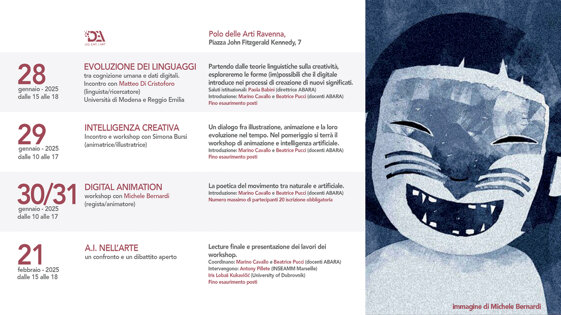
A highly specialized course starts on January 28th at the Ravenna Arts Center funded by the Erasmus+ Program within the European DIGENTART project.
The objective of the course, in line with the results that emerged from the research conducted within the Digentart project, mira to provide knowledge tools on the evolution of technologies and on the relationship between creativity, art and technologies digital.
First, some reflections will be highlighted on the evolution of languages and communication in relationship to digital. New codes and codes will be highlighted transformations in terms of digital and deity anthropology cultural changes in social groups.
Then they will focus in the form of advanced laboratories, held by relevant artists and professionals, some of them important thematic cores:
- Art, visual and persistence of the imagination in animation; dialogue and relationship with digital.
- The role of creativity and the artist in the process digitization and digital project in the audiovisual sector.
At the end of the course a seminar will be held where theoretical reflections and products will intertwine carried out in laboratories and workshops.
They will be present course teachers and partners of the Digentart project of the Academy of Fine Arts of Marseille INSEAMM e of the University of Dubrovnik.
The intent of the course is to perfect the skills of students of the Academy, provide ideas for improvement and qualification for professionals, artists, entrepreneurs, experts
digital, cultural operators with specific focus on the evolution of digital in art.
HugoScurto_AtelierIAdePlaisir.pdf
Leather, robots & embossing
Guests : Nathalie Dewez and AATB studio
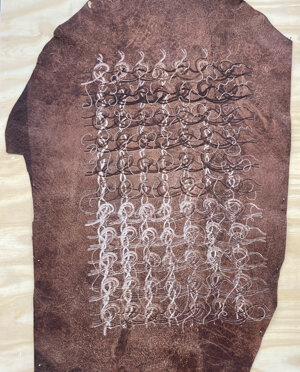
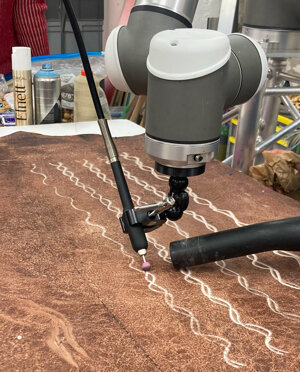
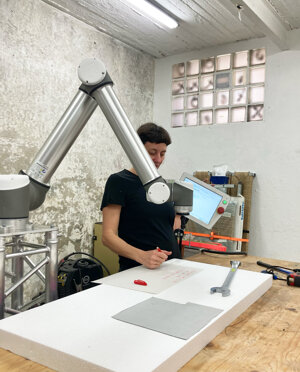
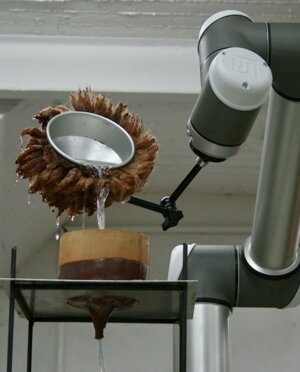
The Guillestre region, located in the Hautes-Alpes, is developing breeding methods that respect the environment and animal welfare. In an effort to embrace the entire animal production chain, a peasant vegetable tanning project was born from the Hautes Vallées slaughterhouse, to give life to animal skins that are usually thrown away. This is a tannery specializing in the treatment of skins from small animals such as sheep and goats. The initiative aims to enhance the value of a noble product that is currently considered waste in the slaughterhouse production chain, which results in high processing costs. Following on from two workshops conducted in 2022 on leather in Tetouan and then in Marseille, we are joining this tanning project to enhance the value of the first vegetable tanned skins, as well as the tests and waste from this production. The projects will be developed in a bio-regional approach associated with robotic creation allowing the experimentation of a new approach, new methods, new tools.
Educational objectives:
The first phase will focus on 2D graphic research that could become structural to create a volume.
The digital use of the robotic arm will be experimental, following the projects created in 2D to groove, scratch, flatten, perforate ... the skins.
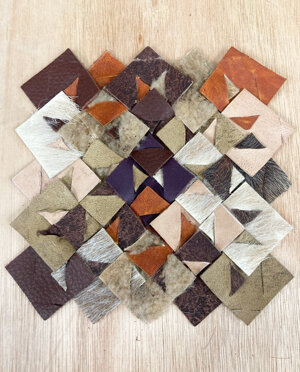
The production, manifest, will use both smooth skins and furs. The research work will focus on different uses; calling upon the specific properties of the skins as well as the shaping of a production of objects open to other issues than those of fashion and leather goods: containers, lamps, blankets, flooring, etc. It could also be sculptural.
Biographical references:
Nathalie Dewez 's work ranges from small objects to monumental installations, from unique pieces to industrial products. Her presence in numerous international fairs and exhibitions has led her to collaborate with several architectural firms as well as with international producers such as Hermès (FR), Habitat (UK), Ligne Roset (FR), De Castelli (IT), Vervloet (BE), among others.
Nathalie Dewez is a designer whose main medium is light and whose materials vary between metal, glass and other durable supports. Whether she designs lighting, objects, furniture or large-scale sculptures, she also works as a lighting consultant for several architectural firms. Her creations reveal her passion for sculptural forms and quality craftsmanship. Some of her iconic pieces feature in the best collections and have received several awards. In 2011, she received the Fondation Design Pierre Bergé award and in the same year, she was named Belgian Designer of the Year.
“A 2001 graduate of the Interior Architecture Department of the École nationale des Arts Visuels de la Cambre in Brussels, Nathalie Dewez quickly found her way into lighting design. Nathalie pays careful attention to the “matter/non-matter” duality, which she considers to be at the heart of all lighting devices, with an emphasis on function as well as the quality of light in switching on and off situations. Nathalie’s works are characterized by an economical use of means, a minimal use of components and an emphasis on ease of production. Her lightweight works have an undeniable charisma. A few lines or surfaces with simple and effective geometry are enough to express a delicate poetry.” (Denis Laurent) https://nathaliedewez.com/
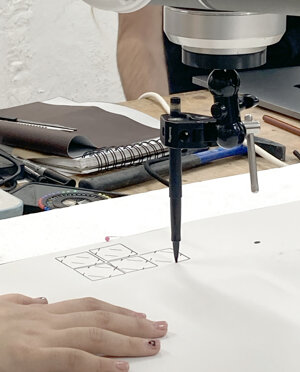
AATB is the collaborative practice of Andrea Anner and Thibault Brevet , both graduates of ECAL in Lausanne. After working on interactive objects and installations, they encountered an industrial robotic arm five years ago. This crystallized an ongoing research on human-machine interactions and led them to investigate the potential of robotics and industrial automation to exist outside the realm of factories.
Their practice involves a close connection and understanding of manufacturing processes, ranging from software programming and electronics to mechanical engineering and precision machining. Reflecting on the diffusion and assimilation of robotics into mundane activities, their work critically explores the novel situations that arise from these changes. Since 2020, the studio has operated a motion control service for the film industry: Superposition. The studio is based between Zurich and Marseille.
Their work has been exhibited at institutions such as ZKM (Karlsruhe), V&A (Dundee), Ars Electronica (Linz), Chengdu Biennale (Chengdu), New Museum (New York), Venice Architecture Biennale, Zollverein (Essen), Unfold X (Seoul), APS Museum (Shanghai), HEK (Basel), Istanbul Design Biennial , Milan Design Week , Museum für Gestaltung (Zürich). They received the Swiss Design Award .
Ravenna October 15, 2024 - Advanced training course in digital scenography for live performance
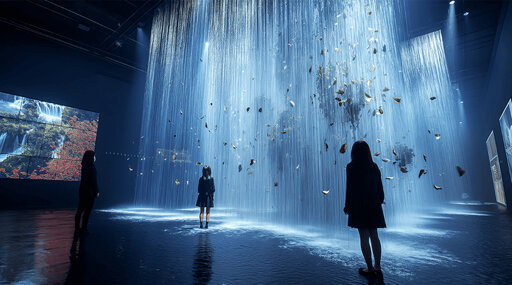
Multimedia has long since entered the world of live performance set design and integrates its expressive languages. Contemporary artistic productions make extensive use of digital stage designs, which allow the creation of virtual three-dimensional spaces in which to represent stage action.
The adoption of digital technologies and creative solutions attracts new target audiences, thanks to forms and languages closer to the new generations. In addition, these technologies allow the creation of more dynamic sets and transform the stage into an immersive world, which can also adapt to different sets.
The course also stems from the insights and suggestions that were developed with the Digent.Art project and the research that involved digital professionals and experts to provide insights and guidance on training needs.
The course in “Digital scenography for Live Performance” provides specialization in digital technologies used in set design, such as 2D and 3D design software, modeling and rendering, virtual and augmented reality tools and other related technologies (videomapping).
The skills will be acquired through a workshop training that will accompany the trainees in the creation of sets for a show that will be performed at the Alighieri Theater in Ravenna at the end of February. At the end of the course, participants will know how to create virtual settings for theatrical productions, performances of musical works and art installations.
The course is an opportunity to enhance one's cultural, artistic background and to improve one's profile for the purpose of qualified professional development both for a placement and for a permanence in the world of work.
The course includes 300 hours of training (200 in the classroom and 100 in project work), which will be carried out between October
2024 and February 2025.
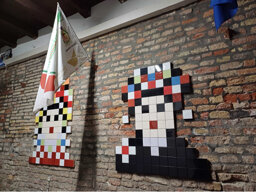
02 – September. A workshop on media and digital art.
A two-year project to work and reflect on the digital in art has begun at the Academy of Fine Arts in Ravenna.
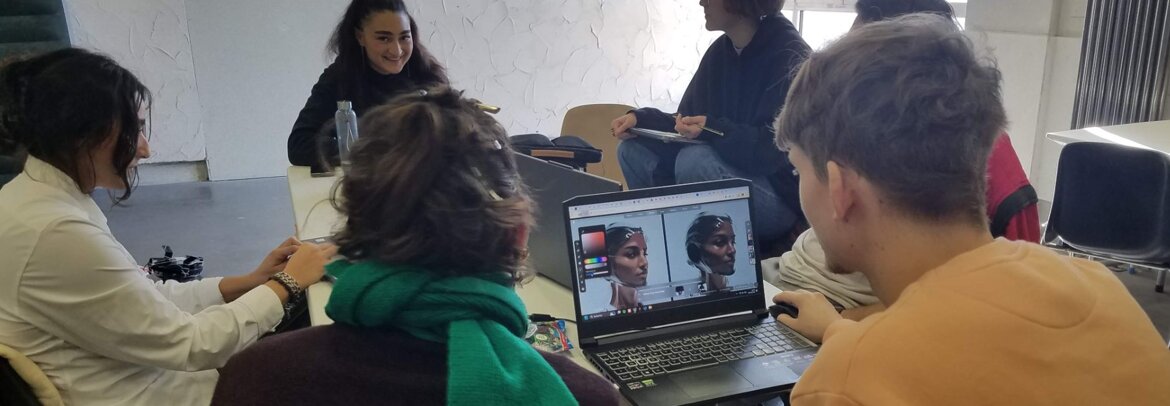
As part of the Cultural Anthropology course, students were invited to design and process around the concept of natural and artificial.
Through a series of urban exploration workshops the students, organized in groups, developed ideas and artistic design to be implemented in the streets and neighborhoods of Ravenna.
The challenge is to accompany the Erasmus Digentart project with a workshop of ideas developed together by students and teachers, artists and cultural experts.
In the next news we will begin to present the projects and proposals of the Digentart workshop. Meanwhile, part of the materials can already be seen on the Digentart website in the “Laboratory tool box” section and on social channels.
You can comment and interact with the designers and artists.
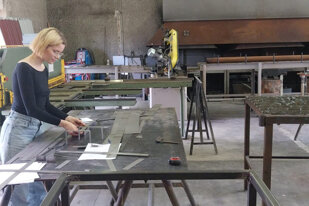
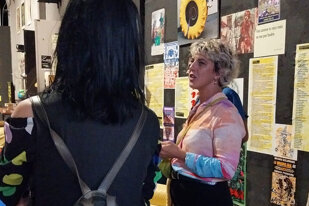
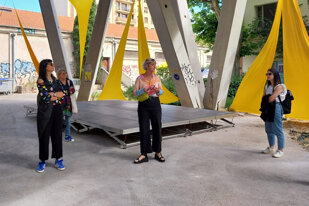
The partners of the Erasmus DigEntArt project met in Marseille from 28 to 29 May for the first in-person meeting of the project. The meeting was an opportunity to discuss the next steps and exchange initial ideas and opinions on the contents and priority initiatives to be undertaken.
The main results of the research conducted by Demetra, with the collaboration of all partners, aimed at analyzing needs and requirements in the cultural and creative sector were illustrated.
Thanks to interviews with stakeholders, experts and companies in the sector, a very varied and interesting picture of the cultural and creative sector emerged. Digital art is transforming thanks to new digital technologies and the impact of virtual reality, 3D models, artificial intelligence will be very strong in this sector.
The meeting was an opportunity to outline a common methodology for the next workshops with stakeholders in the various partner countries of the project and to outline the methodologies and contents of the training courses that will be developed in the coming months in Italy, France and Croatia.
During the meeting, the dissemination plan and the first digital communication tools were presented: the website and the social media pages on Instagram and Facebook. Now digital media is operational and there are already contributions and projects from students, experts, artists and start-ups in the creative artistic sector.
The site will also be a sort of open and dynamic laboratory to develop the teaching toolbox with the pedagogical and training materials provided by the project.
Digent art is an Erasmus project whose led partner is Demetra Formazione, a professional training center active in Emilia Romagna, the State Academy of Fine Arts of Ravenna, INSEAMM the Institute for design and the arts of Marseille and the Department of Arts of the University of Dubrovnik.
30 – May 2024
First presential meeting in Inseamm - Marseille with all partners.
6 - May 2024. Charter for AI generative in Art school.
An essay of "Charter for the Use of Generative Artificial Intelligence in an Art School" by Anthony Pillette (INSEAMM - Reso-nance.org)
Published during Te Ataata residency in Auckland University of Technology ( AUT Auckland - NZ) 2023
Link: https://reso-nance.org/charte-ai/ https://reso-nance.org/artefacts-from-a-future-past/
This document might be subject to update with DIg.ent.art. programm through the collaboration between the HEI involved.
Charter for the Use of Generative Artificial Intelligence in an Art School
Generative artificial intelligence (AI) represents a major technological advancement in the field of artistic creation. However, its use also raises important ethical and artistic questions. This charter aims to establish guiding principles for the responsible and ethical use of generative AI within art school context.
- Creativity and Human Collaboration
Generative AI is a powerful tool that can stimulate artists’ creativity. However, we firmly believe that human creativity and artistic expression are essential elements of any creative process. Therefore, we encourage artists to work in collaboration with generative AI rather than replacing themselves entirely. Generative AI should be seen as a creative partner, never as a substitute for the artist themselves.
- Transparency and Attribution
When using generative AI to create artworks, it is crucial to acknowledge the contribution of the algorithm. Students and teachers should understand how generative AI systems work and their limitations. The use of AI should be transparent and any AI-generated elements in student work should be clearly identified. Artists must clearly indicate that generative AI was used and specify to what extent it contributed to the creative process. Transparency helps preserve artistic integrity and recognizes the role of generative AI as a creative tool.
- Responsibility and Ethics
The use of generative AI must be carried out in a responsible and ethical manner. Artists should consider the consequences of their creations, including issues of representation, algorithmic bias, and societal impact. It is essential to ensure that the use of generative AI does not perpetuate inequalities or harm groups or individuals.
It is important to recognize that generative AI systems are trained on vast amounts of internet data, primarily images and text, which reflect the cultures and viewpoints of their creators and collectors. This data is not neutral and often over-represents Western, white, male, middle-class, abled, heterosexual and other dominant perceptions and aesthetics. Features in the training data like advertising, books, films and art works absorb and propagate cultural biases around issues like race, gender, ability, age and other attributes. As a result, generative AI has the potential to unintentionally reproduce, amplify or fail to represent the full diversity of human experience. Art school students and teachers must be aware that generative tools have built-in blind spots and limitations due to being trained on narrow datasets. When utilizing generative AI, its cultural biases should be understood and mitigated where possible. Diverse, inclusive training data that reflects more fully the richness of human life experiences worldwide would help address these issues over time.
The use of generative AI must not infringe upon the copyrights or intellectual property of other artists. Artists must ensure compliance with applicable laws and obtain necessary permissions when the use of generative AI involves copyrighted elements.
MEMO
Indicate the use of AI in the process. Preventing biases, and identifying them as much as possible. Explaining how these software works to non-expert people who look at these images. Knowing the techniques that would have allowed realizing this image without the help of AI.
9 – November 2023. The project partners met online and had the opportunity to present their organizations, teaching strategies and innovative design areas of the various educational and training institutions. The lead partner Demetra Formazione presented the main lines of the project, the objectives, the overall activity planning and the initiatives planned in the coming months. The partners started an exchange of ideas on how to organize the work and contribute to the development of the activities. The next event of the partnership is scheduled in May, in Marseille.
"This project has been funded with support from European Commission. This website reflects the views only of the author, and the Commission cannot be held responsible for any use which may be made of the information contained therein."